“Peace Cannot Wait”: Social Days Participants Call for Lasting Peace in the DRC
Kinshasa, Democratic Republic of Congo – For many Congolese, peace is not merely a political concept discussed in conference halls. It is a deeply personal aspiration shaped by years of conflict, displacement, uncertainty, and resilience.
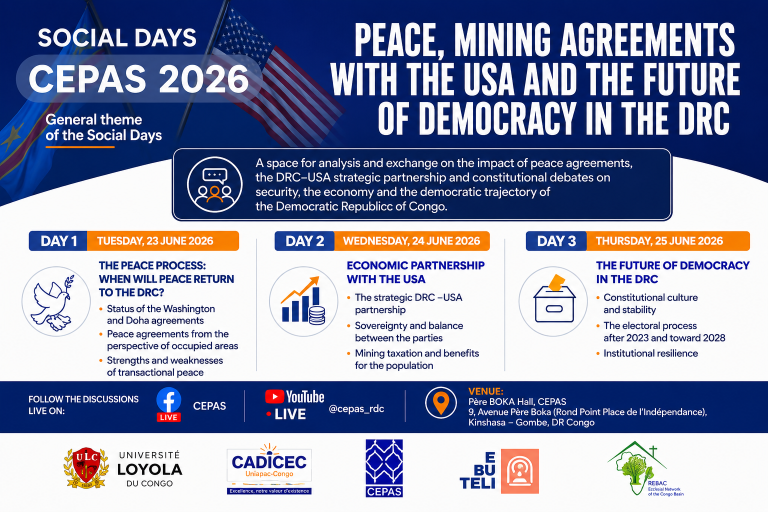
This reality came into sharp focus during the opening day of the 2026 Social Days organized by CEPAS in partnership with EBUTELI, Université Loyola du Congo (ULC), and CADICEC under the theme: “Peace, Mining Agreements with the United States, and the Future of Democracy in the Democratic Republic of Congo.”
As participants gathered to reflect on the country’s peace processes, one message resonated throughout the discussions: peace remains the most urgent priority for the Congolese people.
The first panel, entitled “Peace Process: When Will Peace Return to the DRC?”, brought together researchers, church leaders, academics, and civil society actors to examine the progress and limitations of the Washington and Doha agreements.
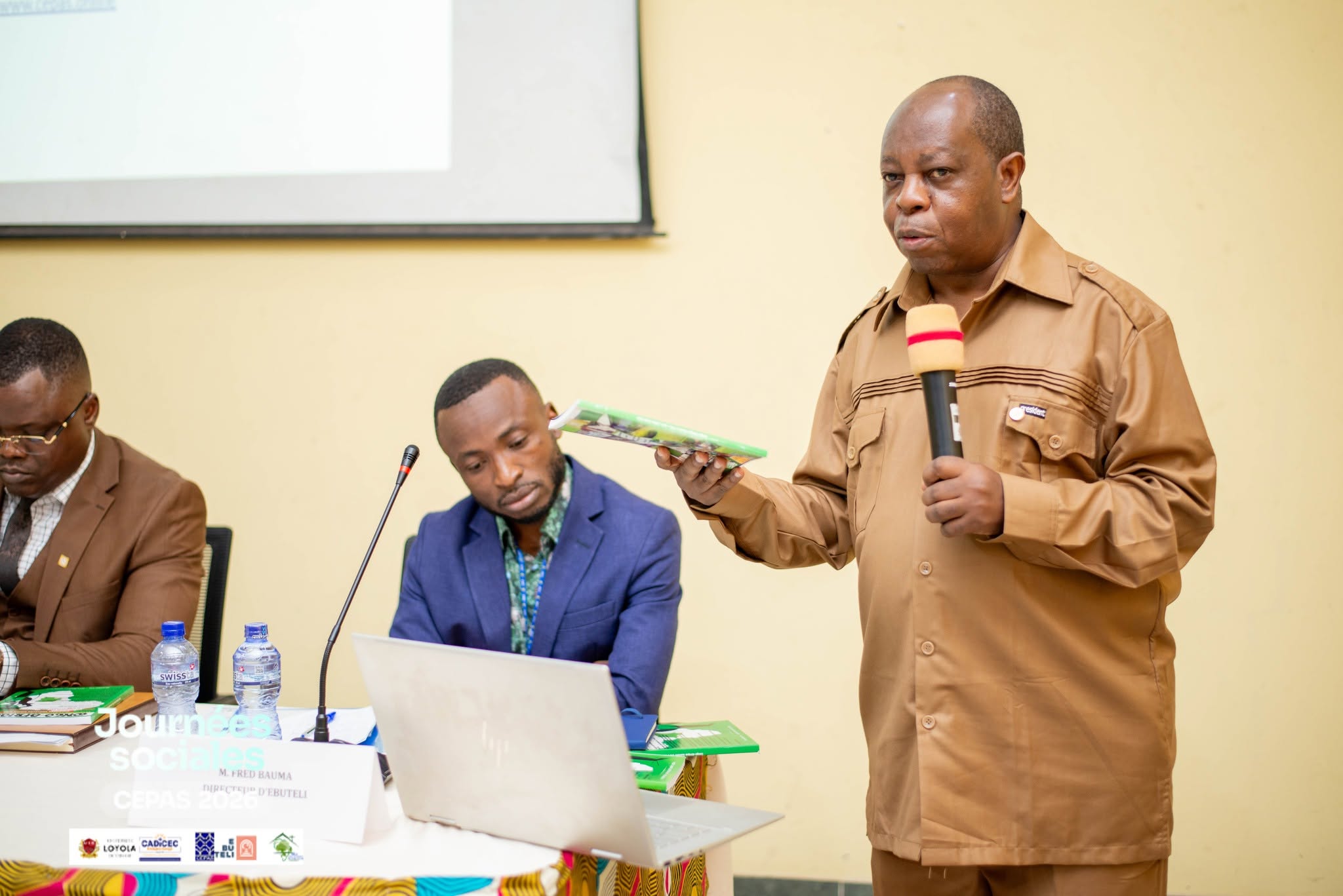
Presenting an overview of the current peace initiatives, Fr. Rigobert Minani, SJ, highlighted the slow implementation of the agreements amid a deteriorating security situation in eastern Congo. His presentation reminded participants that while diplomatic efforts continue, communities in North and South Kivu continue to bear the heavy burden of violence.
For many attendees, the discussion was not merely academic.
“Every day, families in the East wake up not knowing whether they will be safe by evening,” remarked one participant during the plenary discussions. “When we talk about peace, we are talking about people’s lives, their dignity, and their future.”
The human cost of conflict was further underscored by Maître Néné Bintu, who painted a sobering picture of conditions in conflict-affected areas. Her intervention highlighted the suffering experienced by women, children, and displaced communities, many of whom continue to face insecurity and limited access to basic services.
Participants listened attentively as Henri-Pacifique Mayala, researcher at EBUTELI, analyzed the strengths and weaknesses of the Washington Agreement. While acknowledging the importance of international partnerships, he cautioned against relying solely on transactional arrangements to secure peace.
“Transactional peace, in its current form, secures interests; it does not establish lasting peace,” he noted.
His words sparked lively exchanges among participants, many of whom stressed that sustainable peace must be rooted in justice, inclusion, accountability, and the active participation of citizens.
In small group discussions, participants reflected on a central question posed by the moderator, Fr. Rigobert Minani, SJ: What initiatives should be undertaken to collectively affirm that peace remains our priority and our most urgent concern?
The discussions generated a range of proposals, including strengthening civic engagement, promoting dialogue among communities, empowering young people and women as peacebuilders, and ensuring greater accountability from political leaders and regional actors.
Beyond the formal sessions, the Social Days also created a space for encounter and solidarity. During breaks and the shared fraternal meal, participants exchanged personal experiences, forged new connections, and reaffirmed their shared commitment to a peaceful and democratic Congo.
As the first day came to a close, participants left with renewed determination and a collective conviction that despite the challenges facing the country, the pursuit of peace cannot be postponed.
For the men and women gathered at the Social Days, peace is not simply an agenda item. It is a national imperative and a shared responsibility.
“Peace cannot wait,” one participant concluded. “The future of our country depends on it.”