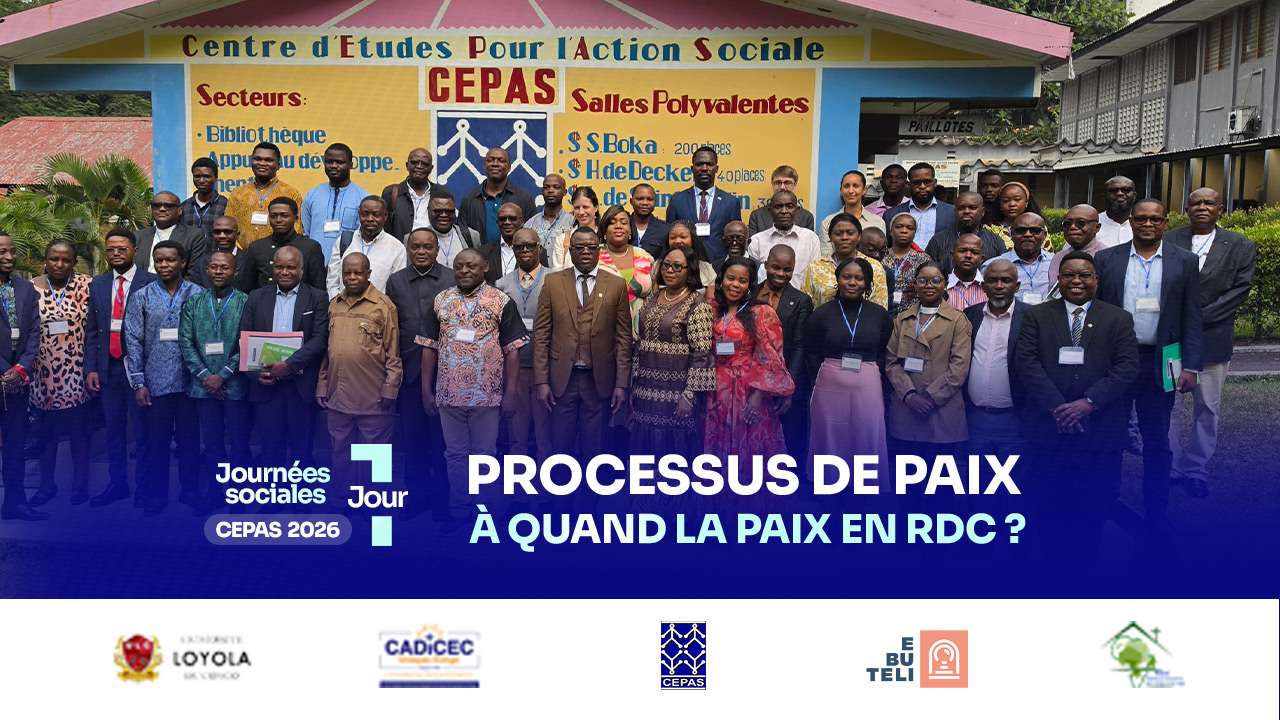
Social Days 2026: Reflecting on Peace Processes and the Future of Democracy in the DRC
Theme: Peace, Mining Agreements with the United States, and the Future of Democracy in the Democratic Republic of Congo
The 2026 Social Days opened under the theme “Peace, Mining Agreements with the United States, and the Future of Democracy in the Democratic Republic of Congo.” The event seeks to foster reflection and dialogue on the contribution of peace agreements to the security, economic, and democratic future of the Democratic Republic of Congo (DRC).
According to the terms of reference of the Social Days, the initiative pursues five main objectives:
- To understand the strategic partnership between the DRC and the United States in light of the vital and long-term interests of the Congolese nation;
- To assess the impact of this partnership on the return of sustainable peace and the preservation of the DRC’s territorial integrity;
- To examine the real or perceived instrumentalization of this strategic partnership in debates surrounding constitutional revision or change;
- To identify the social and political forces that should be mobilized to safeguard the democratic process in the DRC and advocate for lasting peace;
- To propose avenues for action regarding the USA-DRC strategic partnership, the peace process, and the consolidation of democracy in the DRC.
Day One – Panel One: Peace Process: When Will Peace Return to the DRC?
Following the opening remarks delivered by representatives of the co-organizing institutions—EBUTELI, Université Loyola du Congo (ULC), CADICEC, and CEPAS—the first panel focused on the various peace processes underway in the DRC and sought to understand why the signing of numerous agreements has not always translated into lasting peace on the ground.
The discussion began with an overview of the Washington and Doha agreements presented by Fr. Rigobert Minani, SJ. He expressed concern over the slow pace of implementation and the numerous obstacles hindering progress, despite the increasingly chaotic security situation in North and South Kivu.
This alarming situation was echoed by the third panelist, Maître Néné Bintu, who painted a grim picture of life in conflict-affected areas and highlighted the suffering endured by local populations.
The second panelist, Henri-Pacifique Mayala, a researcher at EBUTELI, examined both the strengths and weaknesses of the Washington Agreement. According to his analysis, transactional peace—such as the peace that the DRC hopes to secure through mining agreements with the United States—does not necessarily guarantee sustainable peace.
In his own words, “Transactional peace, in its current form, secures interests; it does not establish lasting peace.”
Following a rich and engaging discussion with the panelists, participants were divided into four working groups to reflect on the question proposed by the overall moderator of the Social Days, Fr. Rigobert Minani, SJ:
“What initiatives should be undertaken to collectively affirm that peace remains our priority and our most urgent concern? And who should take these initiatives?”
After presenting the outcomes of the group discussions and sharing a fraternal meal to conclude the first day, participants departed with a commitment to reconvene the following day for the second panel, which will focus on an in-depth analysis of the economic partnership between the Democratic Republic of Congo and the United States.
By Alain NZADI-a-NZADI, SJ
Director of CEPAS and Editor-in-Chief of Congo-Afrique